
by Averill Buchanan
‘Hello ChatGPT,’ I type into the on-screen text box, ‘I’m researching overlooked women writers from the north of Ireland from 1750 to 2000. The women should be dead and be writers of novels or short stories. Give me a list of names.’
I got the notion to consult ChatGPT after watching ‘Eve’s Byte of the Apple’, a lecture delivered by Sandi Toksvig at Cambridge University earlier this year (https://youtu.be/UG6Ier4UC_8). With her usual biting humour and shrewd insight, Toksvig takes us on a journey from the inception of writing to the development of AI (artificial intelligence), showing how women have been marginalised and excluded from all kinds of histories because ‘the person who got to write stuff down got to make the rules, and those rules, right from the very beginning, were not entirely friendly to women’. Toksvig cites the startling statistic that women, who make up half the population, represent just 0.5% of all recorded history. She goes on to draw a parallel between historical record-keeping and the modern-day digital landscape to make the point that because the erasure of women is so firmly embedded in our past, it’s inevitable it’ll be encoded in our future.
With Toksvig’s words ringing in my ears, I review the answer that ChatGPT gives to my initial enquiry. It serves up 12 names, starting with Mary Ann McCracken (1770–1866) and ending with Alice L. Mulligan (1866–1953). I ask it for more names, but all it does is give me additional information on some of the writers it has already listed.
I’m amazed by the speed of ChatGPT’s response but far from impressed by its answer. It’s a small demonstration of how digital tools, based on incomplete and biased records, can seamlessly paper over the absences and gaps in our histories. I think we owe it to future generations to retrieve as much of our past as possible before it’s erased forever.
I need to backtrack a bit at this point and explain why I’m talking about women writers from the north of Ireland in the first place. It’s a passion project of mine, the culmination of a lifelong interest in neglected or marginalised women writers and built on experience of doing academic literary research.
In the early 2000s, when AI was a twinkle in big tech companies’ eyes, I had the time of my life researching the Wicklow writer Mary Tighe (1772–1810). Twenty-five years ago, she was a little-known Irish poet of the Romantic period, just one of a plethora of women writers who challenged the traditional Romantic androcentric canon (the Big Six: Blake, Wordsworth, Coleridge, Keats, Shelley and Byron).
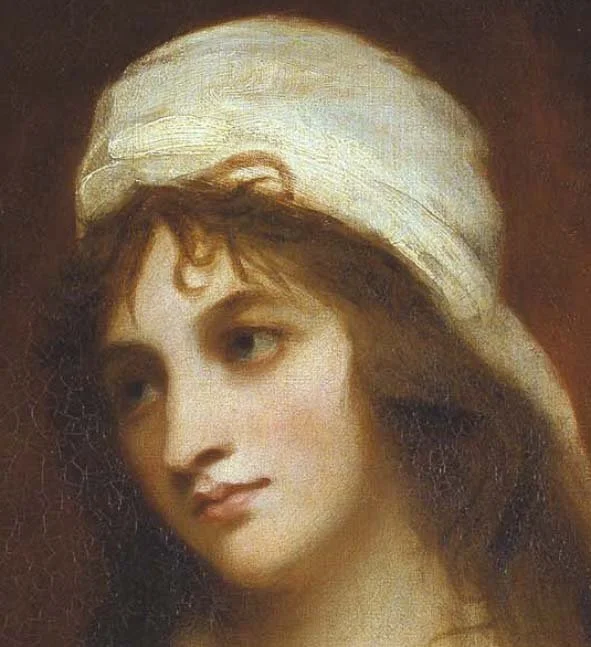
Mary Tighe (1772-1810)
© National Gallery of Ireland
It was while I was working on Tighe that the research bug bit. I loved sitting in the dusty Special Collections room at Trinity College Dublin, which you could only get to via meandering corridors and rickety stairs, or trawling through old microfilmed newspapers at the National Library of Ireland. I still get goosebumps when I remember the day I visited the top floor of Belfast Central Library to view a fourth edition of Tighe’s published poems. It was a trip I thought would take me ten minutes, but the librarian came back from the stacks with two books in her hand. It turned out that shelved beside the book I had asked for was a small leather-bound volume filled with handwritten poems which the librarian thought I might find it interesting. And indeed I did, because the little book contained 12 previously unpublished poems by Tighe. At that stage, I wasn’t sure if they were in her own handwriting (they weren’t), but it didn’t matter that day. Just discovering those ‘new’ poems was an amazing experience for a novice researcher, and to find them on my own doorstep was eye-opening. What else might be lurking in libraries and archives in Northern Ireland that, like the little Tighe book, had gone unsought and untouched for decades?
When I returned to working life in 2004, the research bug didn’t go away. I was immersed in the contemporary Northern Irish literary scene in my day job, but I couldn’t help noticing the absence of a female literary heritage here. I hadn’t paid it much attention before. Most people had heard of Sam Hanna Bell or Brian Moore or C.S. Lewis, not to mention all those (male) poets. But where was the female line of influence? In my own cursory searches, the names that cropped up most often were Amanda McKittrick Ros (best known, unfortunately, for her purple prose), Helen Waddell, Frances Molloy, Janet McNeill and Caroline Blackwood. In her essay ‘Assessing an absence: Ulster Protestant women authors, 1900–60’ (2008), Naomi Doak names at least 23 women writers from the north who had published novels in Ireland and the UK. [1] But surely there were others. This had to be the tip of the iceberg.
It wasn’t until 2015 that I started to do something about it. Inspired by the endeavours of publishers like Virago Press, Persephone Books and Tramp Press, I set up my own little publishing company, Herself Press, with the lofty aim of rescuing and rehabilitating lost female voices from the north of Ireland. Its inaugural publication (and only publication to date) is an ebook reissue of Ruth Carr’s groundbreaking anthology The Female Line, first published in 1985 and long out of print. Ten years later and, because of the day job, I’m not much further on.
But it feels as if there’s a new urgency to this recovery work now. In her lecture, Toksvig points out that the tech industry, which shapes our digital future, is dominated by men and reinforces the same patterns of exclusion that have existed for centuries. Just like the record-keepers of old, the search algorithms and AI language-training models have a built-in gender bias. Unless we actively intervene, the omission and misrepresentation of women will continue apace as the old information is transformed into megabytes.
So I’ve recently been stepping up my efforts to find those ‘lost’ women writers. I should make a couple of things clear: My focus is only on prose – novels and short stories (I’m keeping an open mind about letters, memoirs and journalism) – not poetry, and I use the term ‘north of Ireland’ because the concept of a female literary heritage here needs to include the period before Northern Ireland was formed. At the moment it’s a quantitative exercise of identifying as many women writers as I can, finding out how much work has already been done on them and establishing what library and archive material is available.
So far, I have collected the names of 79 women writers, the earliest born in 1742 (Martha McTier) and the most recent dying in 1996 (Caroline Blackwood). And there are at least 30 women writers for whom I have no birth or death dates and about whom I can find no other information. In fact, it turns out I’m as interested in the women themselves as in their writing.
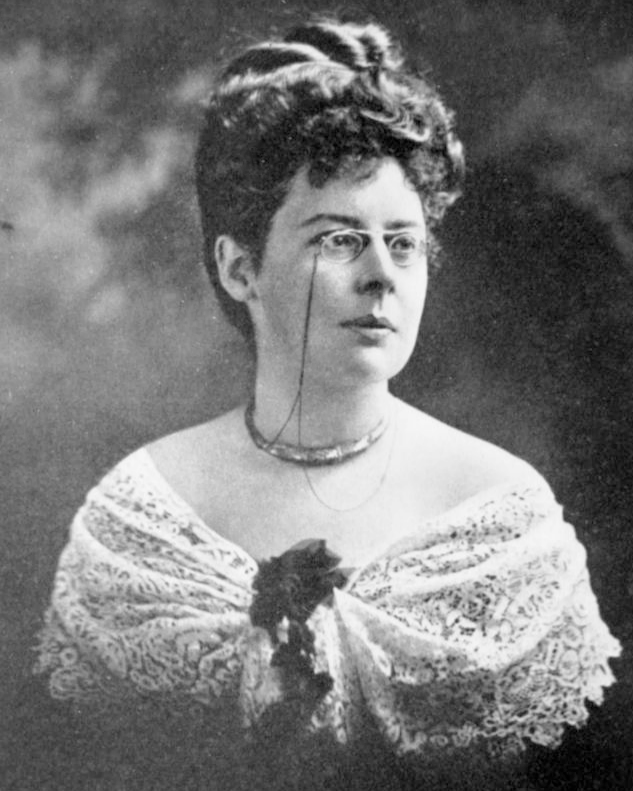
Beatrice Grimshaw (1870–1953)
© John Oxley Library, State University of Queensland
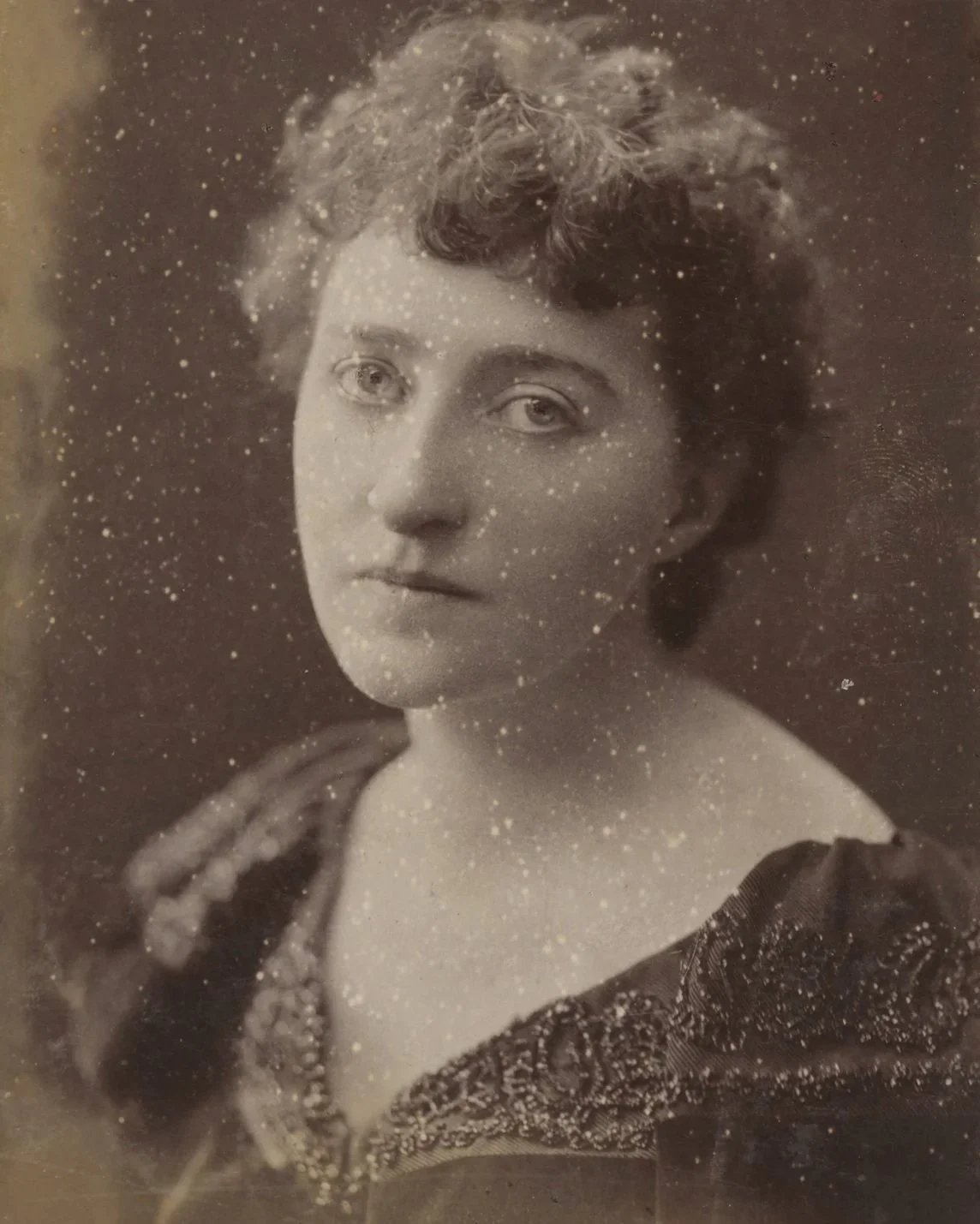
Sarah Grand (1854–1943)
© National Portrait Gallery
My list includes writers with connections to the Suffragist movement such as Sarah Grand (1854–1943) and Kathleen Coyle (1886–1952), ministers’ daughters like Lydia Foster (1867–1943) and Erminda Rentoul Esler (1852–1924), and children’s writers such as Meta Mayne Reid (1905–1991) and Rosamond Praeger (1867–1954). Some, like Violet Hobhouse (1864–1901), came from outside the north of Ireland but spent significant time here, while others like Mary Helena Fortune (1833–1911) and Beatrice Grimshaw (1870–1953) were born in Belfast but died in Australia.
As a researcher, it’s an occupational hazard – a very enjoyable one – to find yourself getting sidetracked. A case in point is my current preoccupation. In the process of exhuming forgotten women writers, I’ve been noting the names of local printers and publishers I come across – McCaw, Stevenson & Orr; Simms & McIntyre; Quota Press; Victor Murray – with the intention of following up on them some day. But for some reason, Quota Press has refused to wait. So down the rabbit hole I’ve gone.
According to an article by Ronnie Adams published almost forty years ago, Quota Press ran from 1927 to 1954 out of an office at 124 Donegall Street, Belfast, and it produced popular literary books and anthologies by many different authors, not all of them from Northern Ireland. For me, however, the most exciting information Adams imparts is that the press was ‘the brainchild of a County Antrim woman, Miss Dora Kennedy’. [2] It has given me another of those intuitive goosebump-y moments – I’ve stumbled across a woman who ran her own publishing house in Belfast!
While Adams helpfully lists the books published under the imprint, his checklist doesn’t go into detail about the types of books it published or its authors. What I now know is that between 1927 and 1951, when the press was under Miss Kennedy’s stewardship, it produced 103 books, as well as twelve 12 editions of Ulster Parade, a biannual anthology of poems, short stories and sketches that was popular during the war years. All told, the press published the work of 112 authors (including those in Ulster Parade), among whom 61 were men, 35 were women and 16 wrote under initials or a pseudonym.
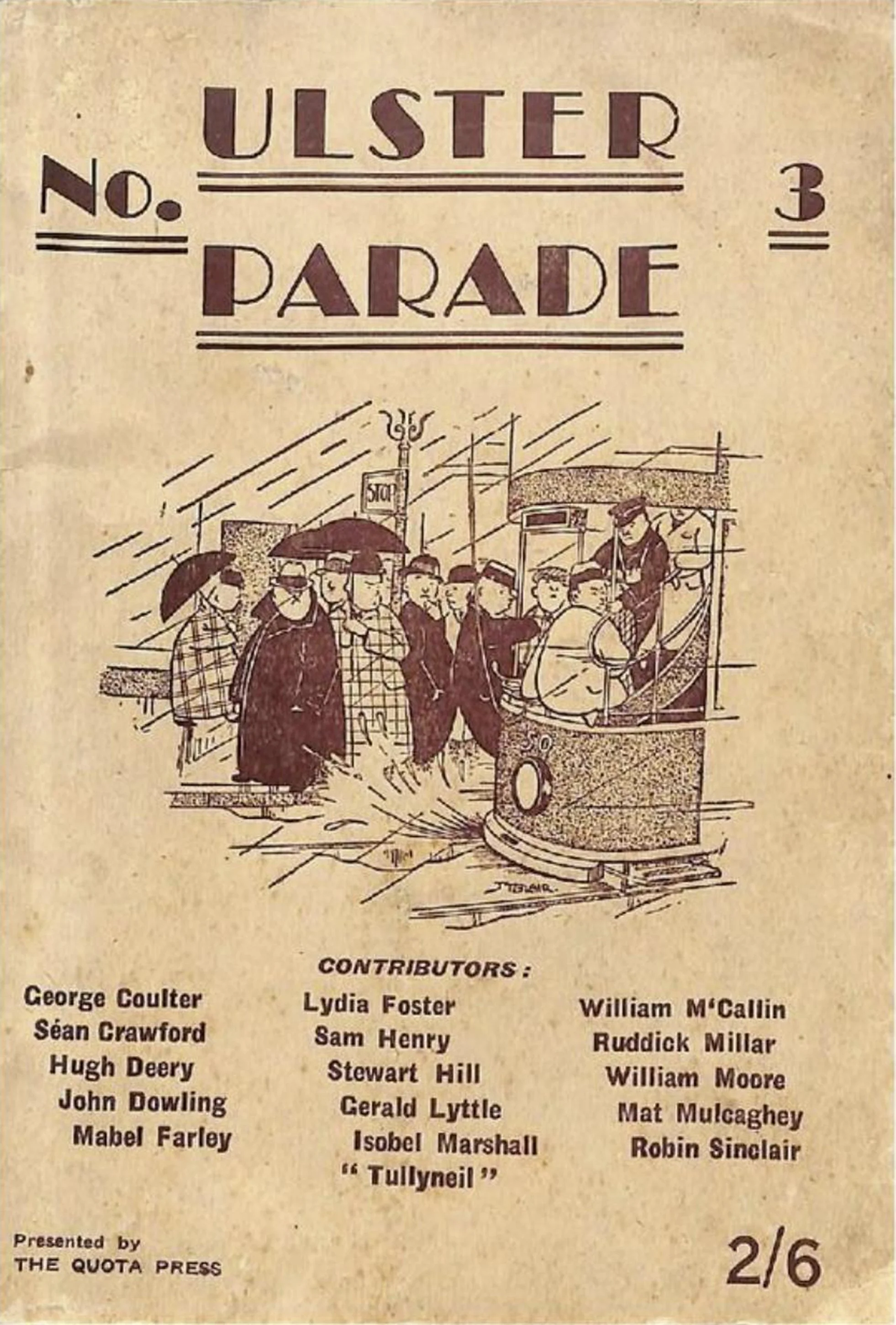
Ulster Parade, No. 3 (1942)
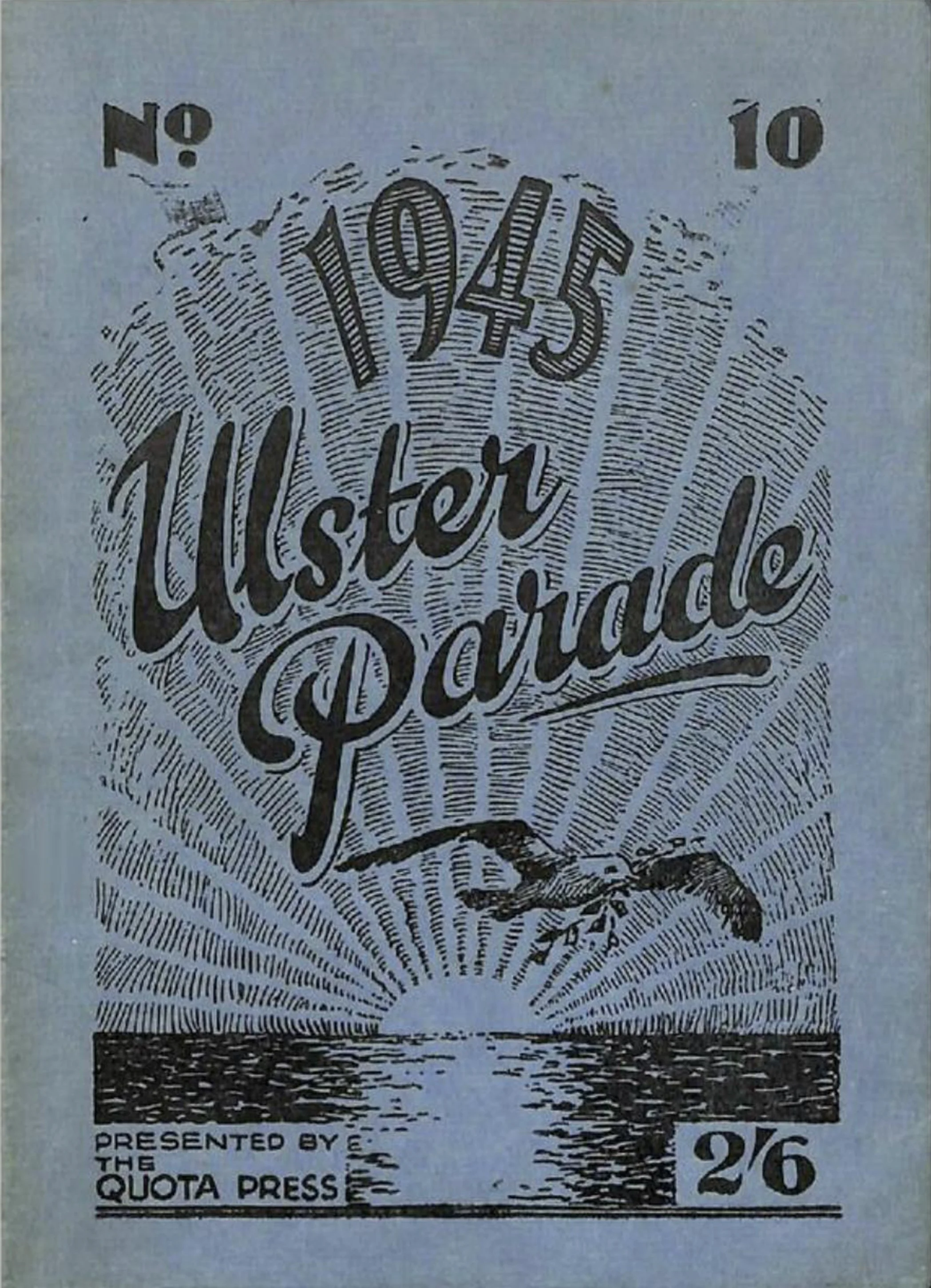
Ulster Parade, No. 10 (1945)
The kind of books Quota published include novels, short-story collections, poetry, drama, fairy tales, local history and memoirs, and several of them are written in Ulster-Scots vernacular. The playwright and poet Ruddick Millar was a favourite with the press; it also issued quite a few works by Protestant ministers. The women writers include Florence Davidson (short stories and poetry), Lydia M. Foster (fiction), Isobel Marshall (short stories), May Morton (poetry), Margaret Norris (fiction), Reema O’Moore (poetry) and Constance Wakeford (fiction). Lydia Foster’s novel Elders’ Daughters (1942) seems to have been very popular and ran to a third edition in 1944, a year after Foster died.
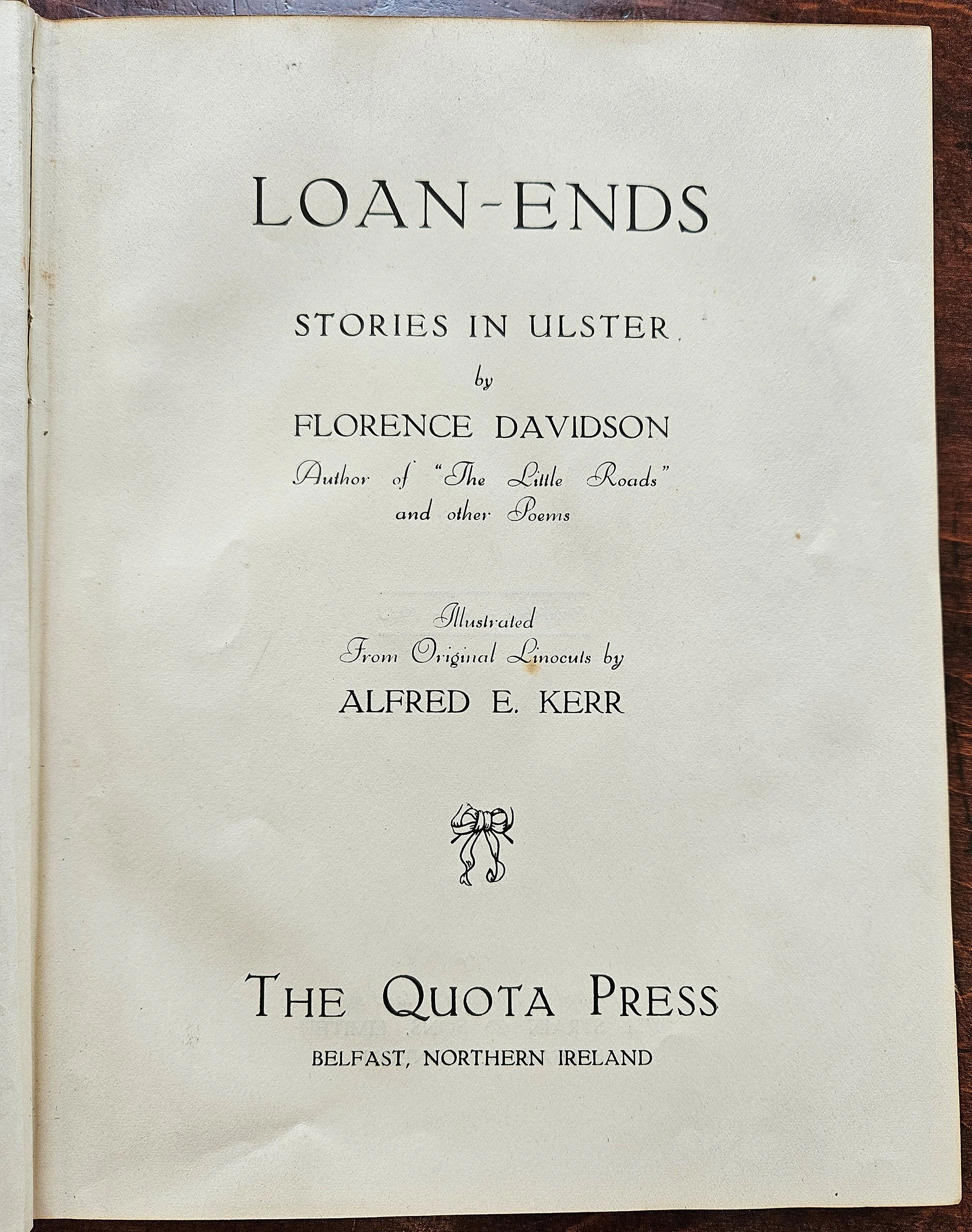
Loan-Ends, title page (published 1933)
But it’s Miss Dora Kennedy herself I’m most interested in. Who was she? Where did she get the money from to set up her venture? What prompted her to do it? She’s proving very elusive; I can’t even confirm Adams’s assertion that her first name was Dora. A tiny article published in The Northern Whig and Belfast Post on 14 August 1951 announces the acquisition of Quota Press by H.R. Carter Publications and congratulates ‘Miss D. Kennedy’ on her retirement from the book trade.
I’ve spent hours trying to track down a Dora – or Dorothy or Dorothea or even just D – Kennedy in census records, obituaries and digitised newspapers, and at the time of writing, I have found almost nothing. She’d been in the publishing business for twenty-five years. What age might an unmarried woman have been when she retired in 1951? The only thing I can be reasonably sure of is that ‘Miss D. Kennedy’ was a Protestant, based on the books she published and the authors she championed.
After the press changed hands in 1951, H.R. Carter continued to publish the odd book under the Quota imprint, but Carter itself ran into problems around 1954 and that was that.
I find myself wondering what ChatGPT might have to say about Quota Press, so I ask: ‘Can you give me any information about a Belfast publishing company called Quota Press, which operated between 1927 and 1951?’ Within seconds, it spits out its answer, a strange amalgam of facts, not all of them to do with Quota. What leaps out at me is the ‘fact’ that the press was ‘founded by Richard Rowley, a poet and writer from County Antrim’. Actually, Richard Rowley founded the Mourne Press in Newcastle, Co. Down, and it operated for only a couple of years during the Second World War.
It’s both horrifying and fascinating that ChatGPT so confidently claims that Quota was founded by a man whose publishing company was nowhere near as successful. The dates don’t even work, because Richard Rowley died in 1947, as any quick Google search will reveal. Essentially, ChatGPT’s answer is a lazy mash-up of easily available information that sounds like it might be true, and there’s a risk that someone looking for quick answers will take it as gospel and run with it. In AI parlance, these kinds of mistakes are called ‘hallucinations’, which makes them sound rather benign. But they are far from harmless; they are actually just a new way to make women inconspicuous. Perhaps a more appropriate word is ‘gaslighting’.
The nature of my work on neglected women writers in the north of Ireland is shifting as time goes on and I discover new things. My research is littered with question marks, but unlike AI, I can live with that. I appreciate the benefits that increased digitisation is bringing, but I’m not willing to forgo the pleasures of doing research the old-fashioned way. Nor do I want to lose the potential for those goosebump moments. I guess a Google search or an AI conversation might accidentally seed an interesting line of enquiry, but it’s not quite the same as discovering a letter tucked between the pages of an old book or an unpublished novel stashed in an attic.
I don’t have anything against AI in principle, but the foundations on which it is built need to be inclusive, accurate and impartial, for how can we presume to know the kind of questions future generations will want to ask? I hope that in the rush to digitise everything, those coming after us will continue to see value in dusty tomes and fragile archives, and have the patience (and skills) to conduct their own old-school searches. But just in case they don’t, it’s up to us – now, while we still have the records – to recover all of our past. If we want to inform the future, as we hurtle into the digital age, it’s more important than ever to fill in the blanks.
Notes
[1] Naomi Doak, ‘Assessing an absence: Ulster Protestant women authors, 1900–60’, Irish Protestant Identities, eds Mervyn Busteed, Frank Neal and Jonathan Tonge (Manchester: MUP, 2008), pp. 126–137.
[2] J.R.R. Adams, ‘The Quota Press: a preliminary checklist’, Linen Hall Review, 3.1 (Spring 1986), pp. 16–17.
This article first appeared in Fortnight Magazine, Issue 498: Reset Agendas (July 2025), pp. 20–24. (https://fortnightmagazine.org/issues/issue-498/). I gratefully acknowledge the support of ACNI in 2022–23 to pursue my research on women writers from the north of Ireland.